Managing appointments in a dental clinic | Complete guide
How to organize appointments efficiently in a dental clinic
Direct answer
Managing appointments efficiently means assigning the right time, clinician, and resources to each visit, then updating the schedule when a confirmation, cancellation, or no-show occurs. For a clinic with several dentists and a reception desk, a clear process gives the team a single, up-to-date version of the schedule.
The problem context
A full schedule does not automatically mean a controlled schedule. Consultation lengths vary, cancellations occur, patients may forget an appointment, and the availability of dentists and treatment rooms can change. Problems arise when reception staff, dentists, and the coordinator work with different information or update the calendar inconsistently.
A useful operational approach starts with realistic time slots for visit types, clear rules for changes, and an easy way for the patient to confirm, cancel, or request rescheduling. NHSBSA guidance recommends adapting the structure of the appointment book to the type of practice and the population served, including reserving capacity for emergencies and estimating consultation lengths realistically. These are general recommendations, not legal rules that automatically apply in Romania.
How to structure the calendar
Before booking, the team establishes visit types, approximate durations, and who can use each slot. It is useful to reserve capacity for emergencies and use realistic durations. These are general recommendations, not legal rules for Romania.
The role of reception and the dentist
Reception staff collect the necessary information, propose available slots, and immediately update confirmations, cancellations, or rescheduling requests. The dentist or coordinator clarifies durations, clinical conditions, and priorities for emergencies. The clinic needs an internal protocol that defines who can modify the schedule and when the rest of the team must be informed.
How the process works
A basic operational flow can include the following steps:
- Establish the visit type, estimated duration, and required resources.
- Check availability before confirming the slot.
- Record the appointment with the details needed by the team and the patient.
- Communicate the date, time, and a simple way to cancel or request rescheduling.
- Update the status when the patient confirms, cancels, or does not attend.
- Periodically review patterns of cancellations, no-shows, and unused slots.
The literature on appointment scheduling in healthcare treats this activity as resource allocation with constraints: time, staff, space, and patient demand. Therefore, a booking rule must take into account the reality of each clinic, not just a fixed number of slots.
Cancellations, rescheduling, and emergencies
A cancellation must release the slot in a way that is visible to the team, and a rescheduling request must follow the clinic's internal policy.
For emergencies, the practice may keep dedicated slots or define triage and escalation rules. Concrete implementation depends on the clinic's specifics and clinical responsibility.
Confirmations, reminders, and communication
Reminders can support attendance, but they do not guarantee the outcome for every patient or clinic. A Cochrane review and a meta-analysis on digital notifications reported an association between reminder messages and better attendance at consultations in the healthcare contexts studied. The effect varies according to context, population, and implementation.
In practice, messages are more useful when they are clear, include essential information, and offer an easy way to respond. As operational guidance, NHS England recommends reminders and easily accessible options for cancelling or rescheduling. This recommendation does not constitute a legal obligation for dental practices in Romania.
How software can help
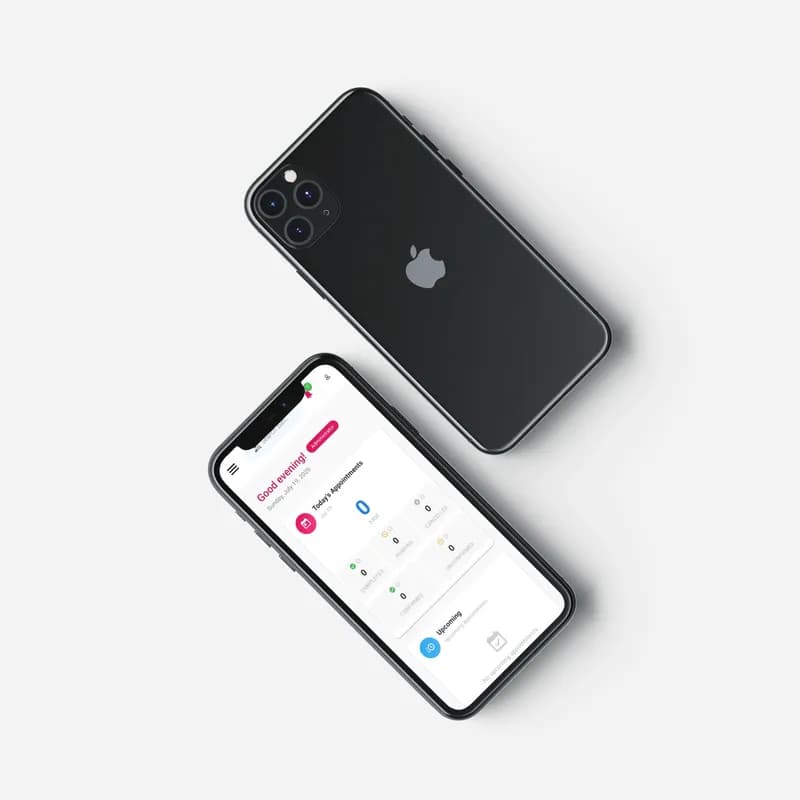
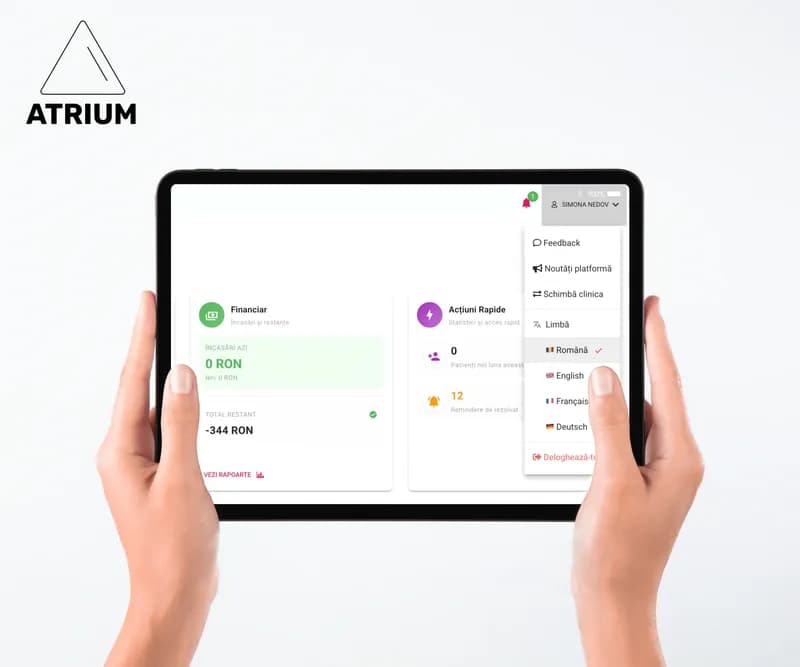
AtriumApp is online software for dental clinic management and includes appointment management.
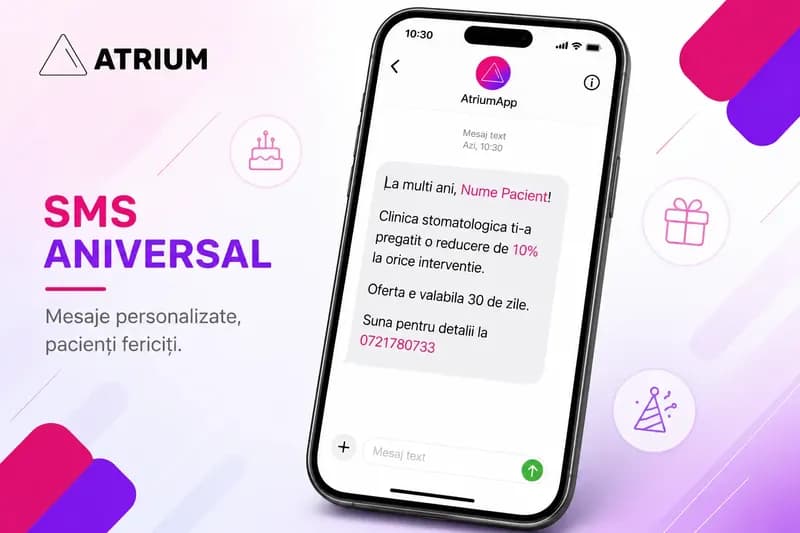
The public page about SMS notifications describes automatic appointment confirmations and reminders, including options to confirm or cancel.
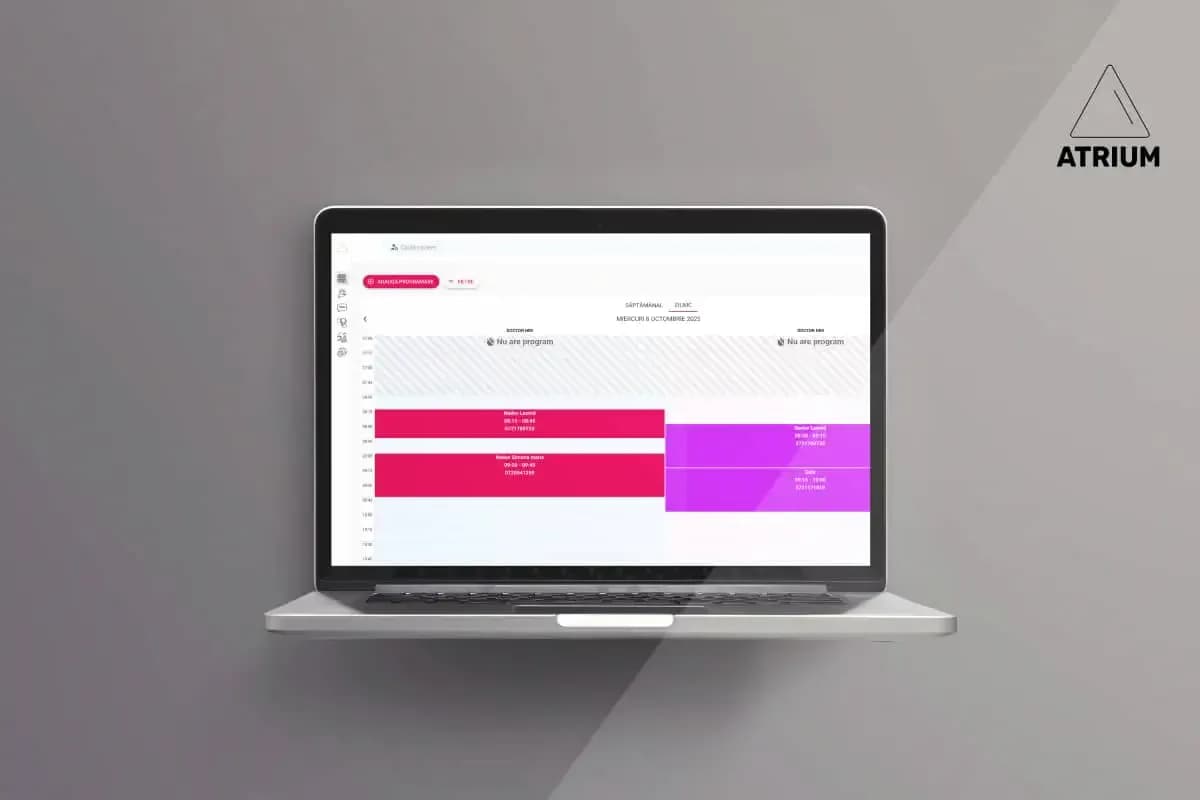
For the team, it is important that the schedule can clearly show the status of an appointment and flag conflicts before they affect the patient or the dentist's schedule.
Software supports the process but does not replace it: the clinic still needs clear rules, accurate data, and verification of its configuration.
Metrics worth tracking
- confirmation rate;
- cancellation rate;
- no-show rate;
- treatment-room occupancy rate;
- average time until the first available appointment;
- average consultation duration;
- time between a cancellation and filling the released slot.
Limits and clarifications
- A reminder does not guarantee that the patient will attend and does not eliminate the need for an internal policy on cancellations and no-shows.
- Recommendations on communication and appointment-book structure must be adapted to the team, patients, and local context.
- This article does not provide legal advice, make claims about legal compliance, or establish obligations for dental practices.
Frequently asked questions
What statuses can an appointment have?
A clinic needs consistent statuses so that the team can distinguish between pending, confirmed, cancelled, and no-show appointments. The exact statuses must be established in its own protocol and checked in the configuration of the software used.
How can an appointment be confirmed or cancelled?
Clear communication with the patient and an easy way to respond help the process. AtriumApp publicly describes automatic SMS confirmations and reminders; however, a message sent does not guarantee the outcome in every situation.
What do you do when the patient does not attend?
Record the situation consistently, keep communication proportionate, and review patterns before changing the schedule or internal policy. External operational recommendations can inform the process, but they do not replace locally applicable rules and obligations.
Conclusion
A well-managed schedule combines realistic time slots, up-to-date information, and easy-to-understand communication. Software can support this flow, but the process remains the clinic's responsibility: data must be checked, rules must be applied consistently, and promises made to patients must match the actual way of working.
If you want to manage appointments in one place and reduce administrative work, you can see how AtriumApp works.