Patient recall in dentistry: how to bring patients back for a check-up
Patient recall in dentistry: how to bring patients back for a check-up
Every dental practice loses patients without noticing. Not because they were unhappy, but because once a course of treatment ended, nobody called them back. The patient left satisfied, forgot, and two years later turned up at another practice, closer to home, because something started to hurt.
Recall, the system for calling patients back for a check-up, is the answer to exactly this quiet leak. This guide explains what recall is, how often patients should be recalled, why recalling by hand almost always fails, and how to build a system that actually works.
What dental recall is
Recall is the system through which a practice periodically invites its existing patients back for a check-up, a hygiene appointment or the continuation of treatment, instead of waiting for them to return on their own initiative.
The difference between those two situations is larger than it looks. A patient in no pain has no immediate reason to call. They put it off, and putting it off works against them: gingivitis or an early cavity they cannot feel has time to progress. By the time they are back in the chair, the problem is bigger, more expensive and sometimes painful.
Recall moves the initiative to the practice. It no longer depends on the patient remembering, at the right moment, a recommendation given out loud many months earlier.
How often patients should be recalled
A simplified idea circulates here: "a check-up every six months, for everyone." The current clinical recommendation is more nuanced, and the nuance matters in practice.
The NICE clinical guideline on intervals between oral health reviews recommends that the interval be set individually for each patient, on the basis of disease levels and assessed risk, rather than as a fixed rule applied to everyone. The same guideline sets the limits: the shortest interval is three months for any patient, and the longest is twelve months for patients under eighteen and twenty-four months for patients aged eighteen and over.
In practice this means six months remains a common value, suitable for many low-risk patients, but it is not a universal standard. A patient with active periodontal disease, high caries risk or treatment in progress needs a shorter interval. A stable adult with no problems can be recalled less often.
For the practice, the consequence is concrete: recall is not a single six-month list, but an interval assigned to each patient individually by the dentist treating them. The NICE guideline is a clinical recommendation from the United Kingdom, not a legal obligation; the decision on the interval rests with the treating dentist, under the rules applicable in your own country.
What a practice loses without recall
The loss has two sides and only one of them is visible.
**The clinical loss** is the one you see in the surgery. The patient comes back late, with a problem that could have been caught early. Treatment becomes more complex, longer and less pleasant for them.
**The loss of activity** is the one you do not see. A patient who comes back regularly for check-ups generates a stream of predictable visits, year after year. Without recall, that stream stops quietly: nobody cancels anything, the patient simply stops appearing. The practice does not experience the loss as an event, but as a diary that fills up more slowly than it should, while it spends on attracting new patients to replace patients it already had.
This mechanism explains why recall is the most readily available source of activity for a practice: it works with people who already know you, who already have a file open, and who have already walked through the door once.
Why recalling by hand fails
Practices do not neglect recall out of ill will. Done by hand, the system breaks at four predictable points.
**Nobody remembers.** No one remembers to call a patient exactly six months later, in among the day's appointments.
**Paper records get lost.** A recall notebook works for a few weeks, then stops being filled in, and the gap stays invisible until it is too late.
**Reception is busy.** Recalls compete with the ringing phone, the patients in the waiting room and tomorrow's bookings. They lose that competition every time, because nobody complains about a call that was never made.
**There is no clear owner.** When recall is everyone's job, it is nobody's job.
The result is that recall stays a good intention rather than a process.
How to put a recall system in place
**1. Set the recall at the end of the visit.** The ideal moment is while the patient is still in the chair. You set the reason, check-up, hygiene or review after treatment, and the interval that suits them.
**2. Keep the record in one place.** The recall has to surface on its own when it falls due, without depending on anyone's memory. A central list of who needs recalling and when is the backbone of the system.
**3. Give it an owner.** Someone at reception works through the list as a routine task, at a fixed point in the day or week, not occasionally.
**4. Choose the right channel.** Phone and SMS both work. SMS has the advantage of being less intrusive and much faster to send to a number of patients; the phone remains the right choice for patients with complex treatment or those who do not respond to messages.
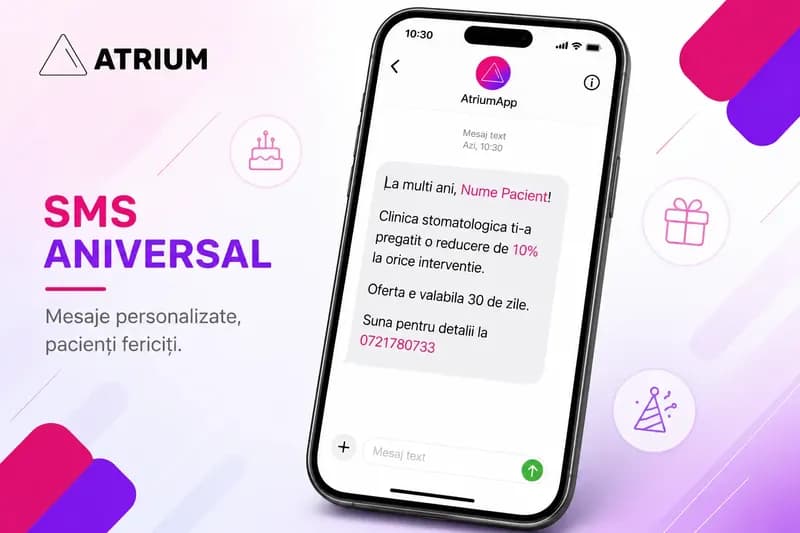
**5. Personalise the message.** A message carrying the patient's name and the specific reason for the recall is easier to recognise than a generic text sent identically to everyone.
**6. Measure.** How many of the patients you recalled actually book? Without that number you do not know whether the system works or merely consumes time.
How recall works in AtriumApp
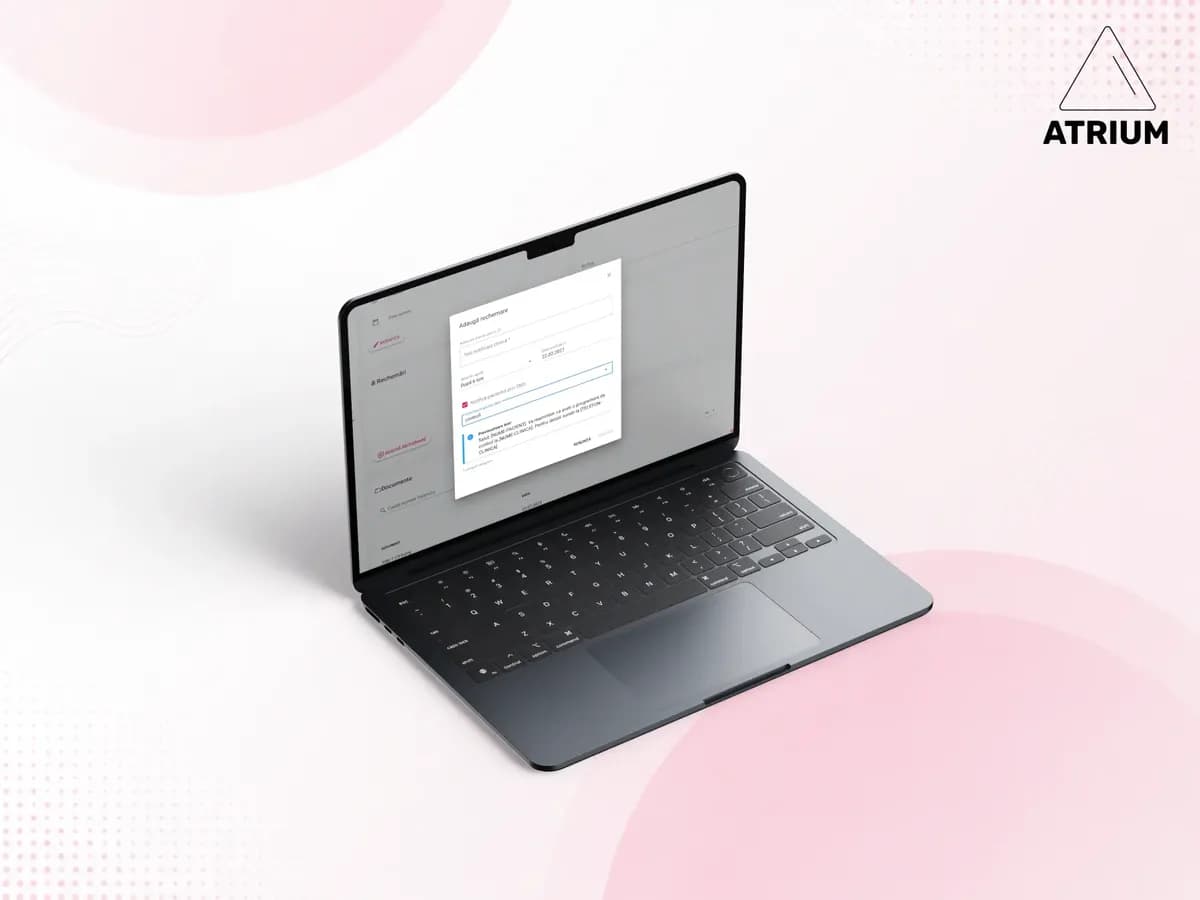
You schedule the recall straight from the patient record: you choose the reason, hygiene, check-up or review, and when the patient should be recalled, and the recall stays attached to them.
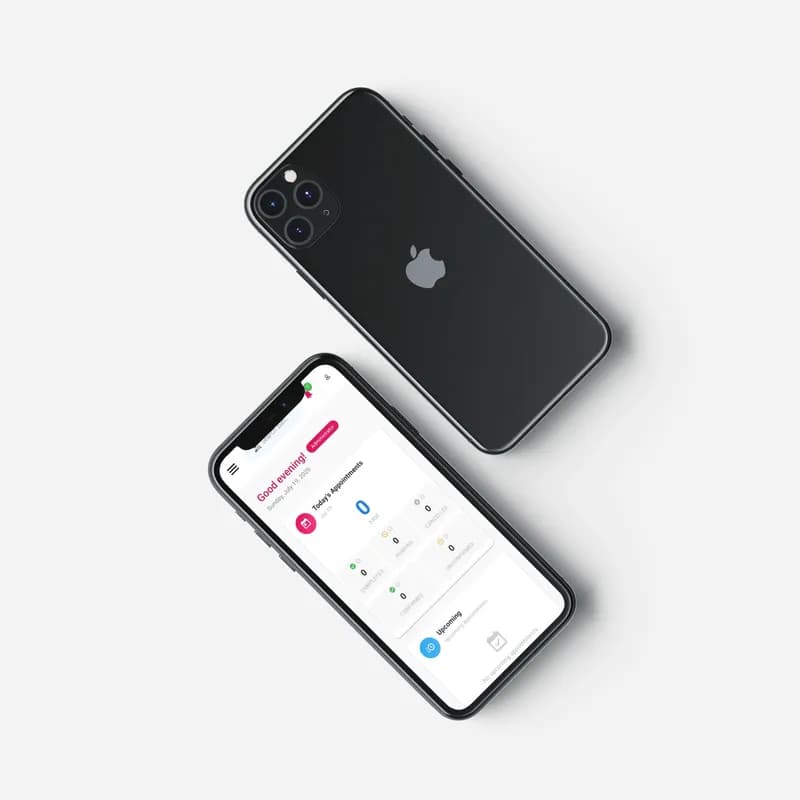
A dedicated page shows you every recall in the clinic, who needs recalling and when, in one place your reception can use as a worklist. For patients who fall due, the clinic receives an internal notification. For each patient there is a recall history, so you can see what was sent and when.
In settings you prepare message templates with dynamic variables for first and last name, one for each situation: one text for hygiene, another for the periodic check-up. That way the message goes out personalised without being rewritten each time.
The internal clinic notification is included at no additional cost. Actually sending the SMS to the patient uses the platform's optional SMS service, if you choose to reach patients by text as well as by phone.
Commercial terms differ by market: the platform is offered as a subscription, while for practices established in Romania full access is offered free of charge and guaranteed contractually for five years.
If you want to see how this works in practice, start from the recall module and look at the recall list the way your reception would use it on an ordinary morning.
Frequently asked questions
What is recall in dentistry?
It is the system through which a practice periodically invites its patients back for a check-up, a hygiene appointment or the continuation of treatment, instead of waiting for them to return on their own initiative.
How often should patients be recalled?
The NICE clinical guideline recommends setting the interval individually, according to each patient's disease levels and risk, rather than a fixed interval for everyone. The recommended limits are a minimum of three months for any patient and a maximum of twelve months under eighteen, or twenty-four months from eighteen upwards. Six months remains a common value for low-risk patients, while patients with periodontal disease need shorter intervals. The decision rests with the treating dentist.
Why does recall matter to a practice?
It reduces the quiet loss of patients, helps catch problems early while they are simple to treat, and maintains a stream of predictable visits from patients the practice already has.
Should recalls go out by phone or by SMS?
Both work. SMS is less intrusive and faster to send to a number of patients, while the phone remains suitable for complex cases or for patients who do not respond to messages. Many practices combine the two.
Can recall be automated?
You can drop the manual paper record. In dental software with a recall module, recalls surface on their own as they fall due, in a central list, and messages to patients are sent from personalised templates. Setting the interval remains a clinical decision, made by the dentist for each patient.
Sources
- NICE clinical guideline CG19, Dental checks: intervals between oral health reviews (United Kingdom).
-800x650.png&w=3840&q=75)